Car mounts, phone holders and wireless charging housings, molded on our own machines under our own process control — not outsourced and re-quoted.
Most of what we mold is a product somebody holds, clips to a dashboard, or looks at every day in a car. That changes the job. A phone holder sits in the driver's eyeline, so a sink mark or a weld line in the wrong place is a cosmetic reject rather than a note in a tolerance report. A clamp arm opens and closes thousands of times, so the hinge and spring geometry have to survive the production run, not just the first sample.
Molding a visible, handled consumer part is a different problem from molding a hidden internal bracket. It is the problem we have been working on since 1994.
Because tooling and molding sit under the same roof and the same process discipline, tool behavior and process parameters get corrected together. When a part drifts out of specification there is no negotiation between a toolmaker and a molder who each blame the other — the correction happens in one place.
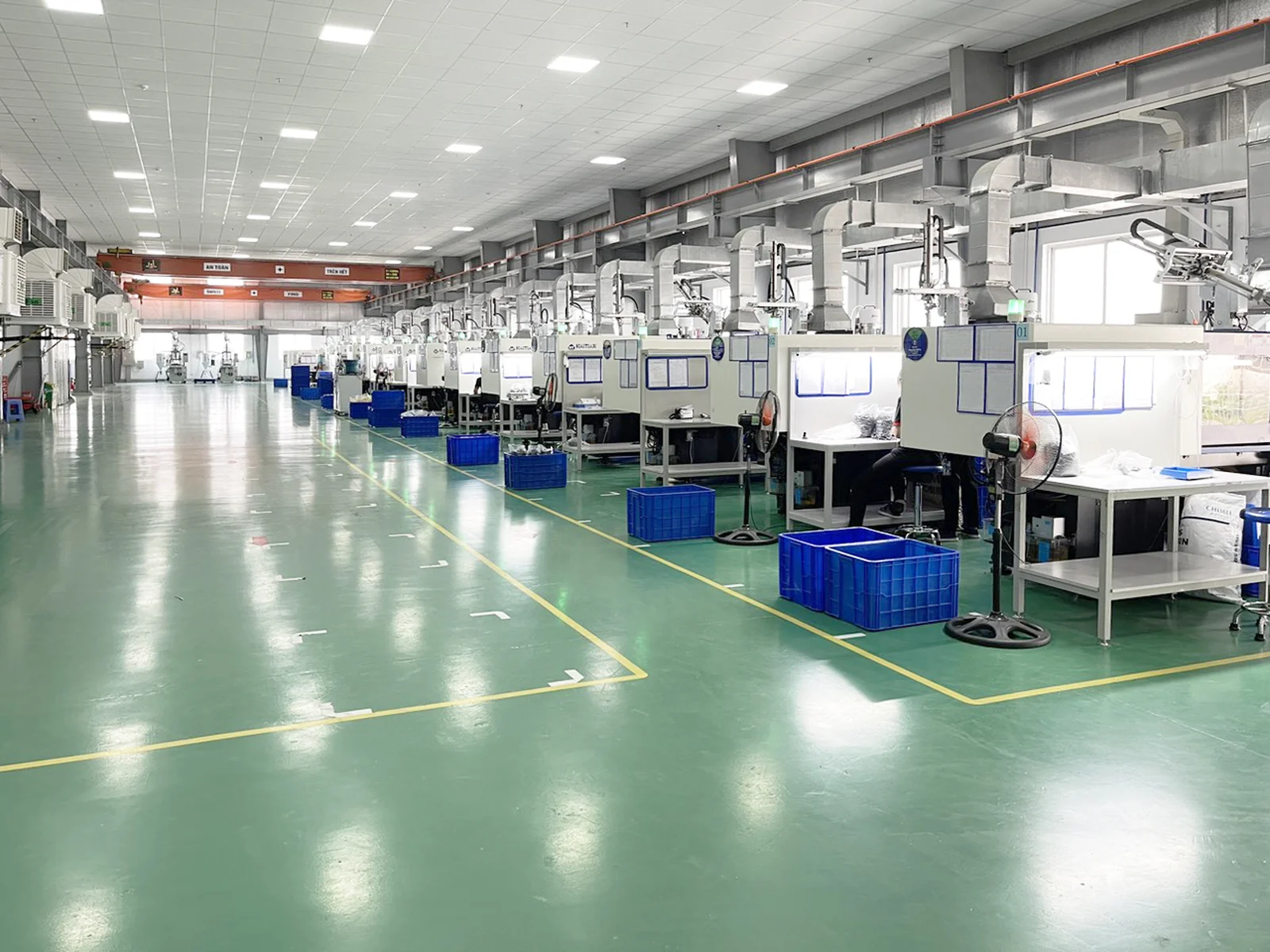
29 injection machines across two molding halls at our Vietnam plant — 27 horizontal, 2 vertical — from 35 to 550 tons of clamping force, supported by take-out robots, mold temperature control, cooling and dehumidifying dryers for engineering materials. More than 318 proprietary molds are already running in our plants.
CNC machining, stamping and aluminum die casting are handled by partner suppliers we manage. We list them as partner processes rather than presenting them as in-house capacity, so your sourcing review reflects what we actually operate.
Specific materials, tonnage and special molding requirements are confirmed against our current equipment list before anything is quoted.
Tell us the product, the material direction and the volume you are planning for, and we will tell you whether it fits our machines and what the tooling route looks like.
